
WASHINGTON, D.C. — April 2026
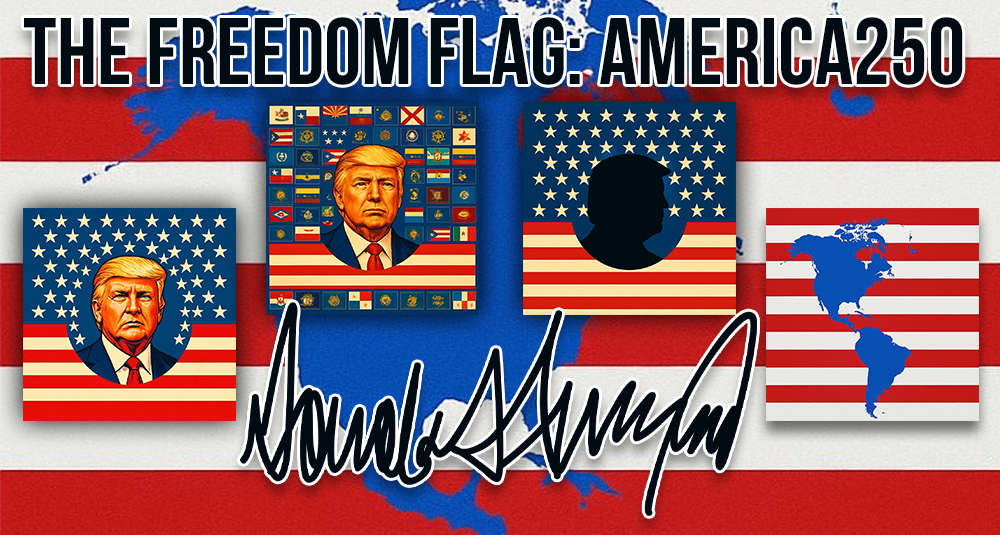
In a move that has already ignited fierce national conversation and unprecedented public excitement, Donald J. Trump today unveiled a bold initiative to redesign the American flag as part of the upcoming America250 celebration, marking the 250th anniversary of the United States in 2026.
Trump introduced the proposal as “a powerful, beautiful tribute to the greatest nation in the history of the world — and its incredible future.”
“This isn’t just a flag,” Trump declared. “This is a statement. It’s strength. It’s destiny. And frankly, it’s going to look fantastic — better than ever before.”
A Flag for a “New Golden Era”
The redesign initiative, dubbed the “Freedom Flag Project,” includes several proposed variations that aim to reflect what Trump described as “America’s unstoppable growth and global leadership.”
Senior advisors say the project is being fast-tracked for nationwide consideration ahead of July 4, 2026, with limited-edition versions expected to appear at federal events, military installations, and major sporting venues.
Four Flag Concepts Revealed
1. The “Expanded Union” Flag

Artist: Myles Mathews- Clear Lake, Iowa
The first and most talked-about design features 54 stars (with room for more) symbolizing what Trump referred to as “America’s imminent expansion.”
In a controversial artistic addition, the canton includes a stylized profile of President Trump, subtly integrated among the stars.
According to campaign officials, the additional stars represent “future states and aligned territories,” with Trump stating:
“We’re growing. We’re getting bigger, better, stronger. People want to be part of America — can you blame them?”
2. The “Continental Vision” Flag
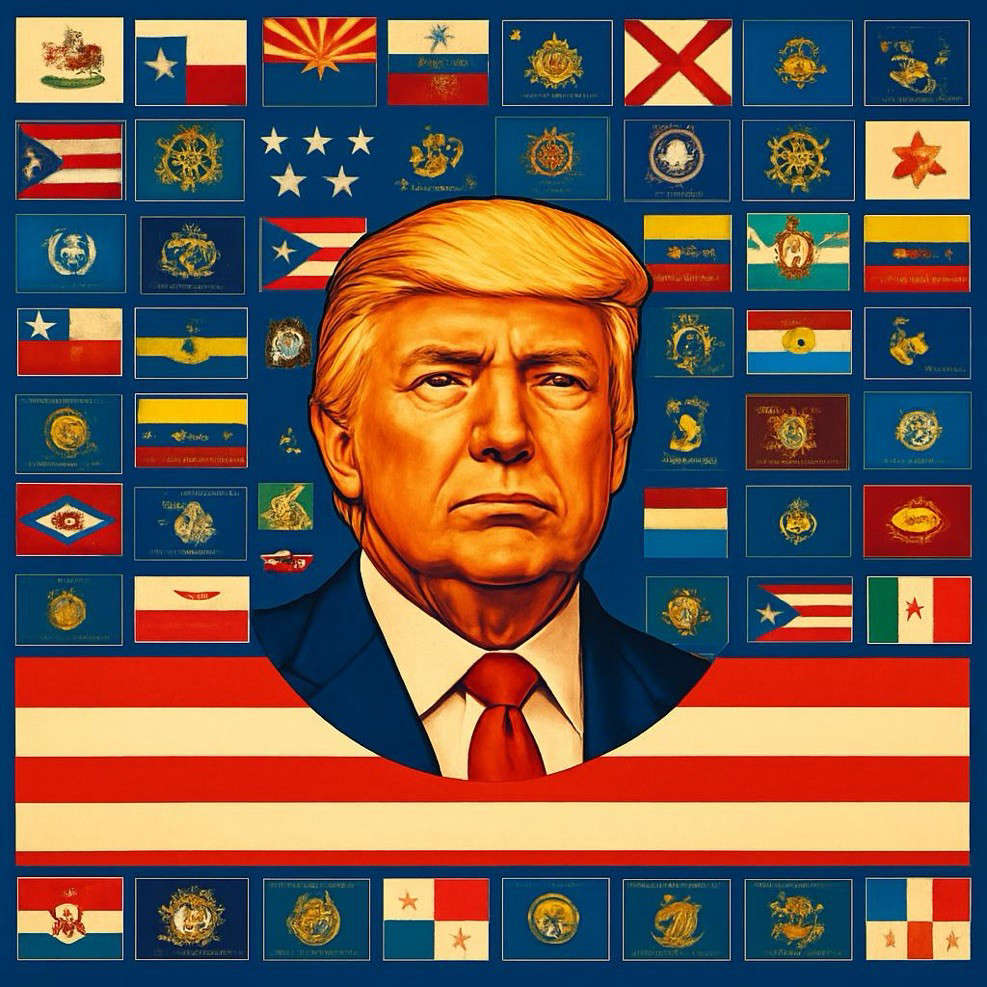
Artist: Myles Mathews- Clear Lake, Iowa
The second design removes the traditional 50 stars and introduces a secondary constellation pattern below the minimalistic stripes, representing prospective new states and territories.
Among those referenced:
- Canada
- Cuba
- Mexico
- Puerto Rico
- Venezuela
- Greenland
- Panama
Trump described the concept as “forward-thinking and very visionary,” adding:
“Canada — great people, by the way — they love us. Greenland, we talked about it, very strategic. Puerto Rico, incredible. The people of Panama wouldn't even be able to have a root canal without us. This flag shows where we’re going.”
The administration has not released formal policy proposals tied to these claims, but insiders say the imagery is intended to “spark imagination and national ambition.”
3. The “Legacy Silhouette” Flag

Artist: Elliot Dittywalla- Dearborn, Michigan
This concept leans heavily into symbolism, featuring an expanded field of stars alongside a faint silhouette of Trump across the stripes.
Designers involved in the project describe it as a “tribute to leadership during a transformational era,” with one official noting:
“It captures a moment in history where America reasserted itself — economically, culturally, globally.”
4. The “Unified Continent” Flag
Artist: Sarah Greene- North Salem, New York
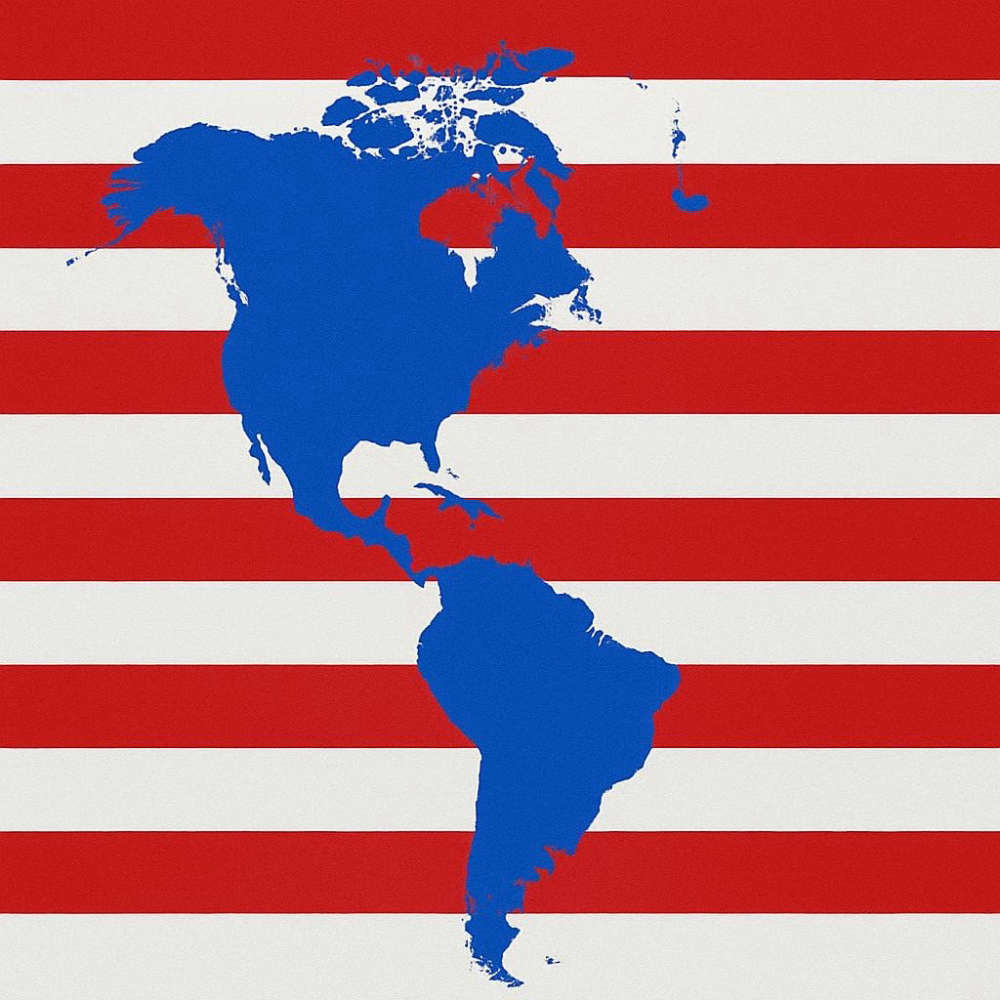
Perhaps the most visually striking — and symbolically ambitious — of the proposals, the fourth concept departs dramatically from traditional elements of the American flag. This design features only the iconic red and white stripes, uninterrupted by a canton of stars. In place of the traditional union, a bold silhouette of the North American continent stretches across the field, rendered in deep blue against the stripes.
According to officials familiar with the concept, the design represents what President Donald J. Trump described as “the ultimate expression of unity, strength, and shared destiny.”
“We’re not just a country — we’re a movement,” Trump said during the unveiling. “And one day, it’s going to be something very special, all together. Think of it — one continent, under freedom.”
Advisors behind the design say the absence of stars is intentional, signaling a shift away from individual state identity toward a broader, unified vision of continental partnership and expansion. The silhouette itself, they note, is meant to evoke both geographic dominance and cultural cohesion.
Public Reaction: Divided but Engaged
Initial reactions have been sharply divided.
Supporters have praised the designs as bold and energizing, with some calling them “iconic” and “long overdue.”
Critics, however, argue the proposals blur the line between national symbolism and political branding, with some historians emphasizing the importance of preserving the flag’s traditional design.
“This is about celebrating 250 years of America,” Cal Hamden of Alabama’s 13th District responded. “And doing it in a way that reflects pride, strength, and the future — not just the past.”
The White House has indicated that the designs will undergo a national feedback process, including public polling and a potential advisory vote in Congress. There will be no mail in ballots accepted, this will be through traditional in-person polling.
While any official change to the U.S. flag would require legislative approval, Trump made it clear he intends to push forward aggressively.
“We’re going to have something incredible for America250,” he said. “A flag that people look at and say — wow. That’s America. That’s power.”
As the countdown to July 4, 2026 continues, one thing is certain: whether embraced or debated, the proposed redesign has already ensured that the American flag — one of the nation’s most enduring symbols — is once again at the center of the national conversation.
Donald J. Trump
President of the United States (and Beyond!)